Michelin isn’t waiting around to let under-inflation ruin your day. They are actively collaborating with other tech firms on a system called TIPM (Tire Intelligent Pressure Management). We’re looking at a 2005 release window for this active pressure-management tech. The concept is straightforward but powerful: a built-in compressor adjusts pressure in each tire while you drive. It compensates for slow leaks and punctures in real time. You aren’t just a passenger in this scenario. You control the setup. Choose comfort. Switch to sporty. Throw it into all-terrain or over-obstacle mode. The car adjusts the PSI on the fly to match your intent.
This isn’t the only player in the ring. Two other systems are in the early development stages for the consumer market. They take different mechanical approaches to the same problem.
The Peristaltic Approach: EnTire
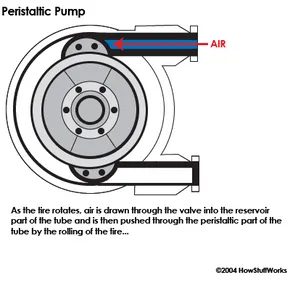
The EnTire Self-Inflating Tire system doesn’t rely on wheel rotation for power. Instead, it uses a specialized valve. This valve pulls ambient air from the atmosphere. It then pumps that air into the tire using a peristaltic-pump action. Think of it like an intestine squeezing fluid through a tube. The goal is constant maintenance. It keeps the pressure at a specific set point automatically. No driver input required once the baseline is set.
The Hub-Mounted Solution: Cycloid AutoPump
Cycloid’s AutoPump takes a more mechanical route. It mounts a small pump directly to the wheel hub. This pump is powered by the turning of the wheels themselves. No external electrical load is needed for the compression stroke. A monitor watches the pressure constantly. If it detects a drop of just 2 to 3 psi, the pump engages. It pushes air into the underinflated tire. There is also a warning system for punctures. If the pressure drops faster than the pump can handle, you get an alert.
Why This Matters Now
Most drivers still treat tire pressure as a monthly chore. You stop at a gas station. You fumble with a gauge. You add air until the needle hits 32 or 35 PSI. That is manual intervention. It is prone to error. It is also dangerous if you ignore the max PSI printed on the sidewall. Over-inflated tires are prone to bursting. They reduce traction. They wear out faster in the center.
Self-inflating tires solve the leak problem before it becomes a safety hazard. They maintain optimal contact patch. This improves fuel economy. It improves handling. It extends tire life. The technology exists. The question is adoption.
Self-Inflating Tires FAQ
How do self-inflating tires work?
They use valves that allow air to enter or exit as needed to hit the target pressure. Sensors detect if the tire needs more or less air. The system then activates a pump or valve mechanism to correct the imbalance.
Can a tire inflate on its own?
Not naturally. Rubber doesn’t create air. A tire only inflates itself if it is part of a specific tire-inflation system like TIPM, EnTire, or AutoPump. Without that hardware, you must manually inflate the tire.
Can I inflate tires at a gas station?
Yes. Most gas stations have air pumps. You can quickly add air manually. It is the traditional method. It is also the method these new systems aim to replace or augment.
What is the proper tire inflation?
Every tire is different. Check the sticker inside the driver’s side door jamb or consult your owner’s manual. Most passenger cars recommend staying between 32 and 35 pounds per square inch (PSI). That is the sweet spot.
Should you inflate tires to the max PSI?
No. Stick to the vehicle’s recommended PSI. The max PSI on the sidewall is the safety limit, not the operating target. Over-inflating reduces ride quality and increases the risk of a blowout. Stay within the manufacturer’s range.
The Road Ahead
We have seen central tire inflation systems in heavy-duty trucks for years. The Army uses them. So do some commercial fleet vehicles. Bringing this down to the consumer sedan or SUV is the next frontier. If TIPM, EnTire, and AutoPump succeed, the monthly gas station run might become a relic. Imagine a car that knows it’s running low on air before the dashboard light even blinks. Imagine adjusting your suspension and tire pressure with a single button press. The tech is there. The engineering is solid. The only variable left is whether we are ready to trust a machine with our safety margin.