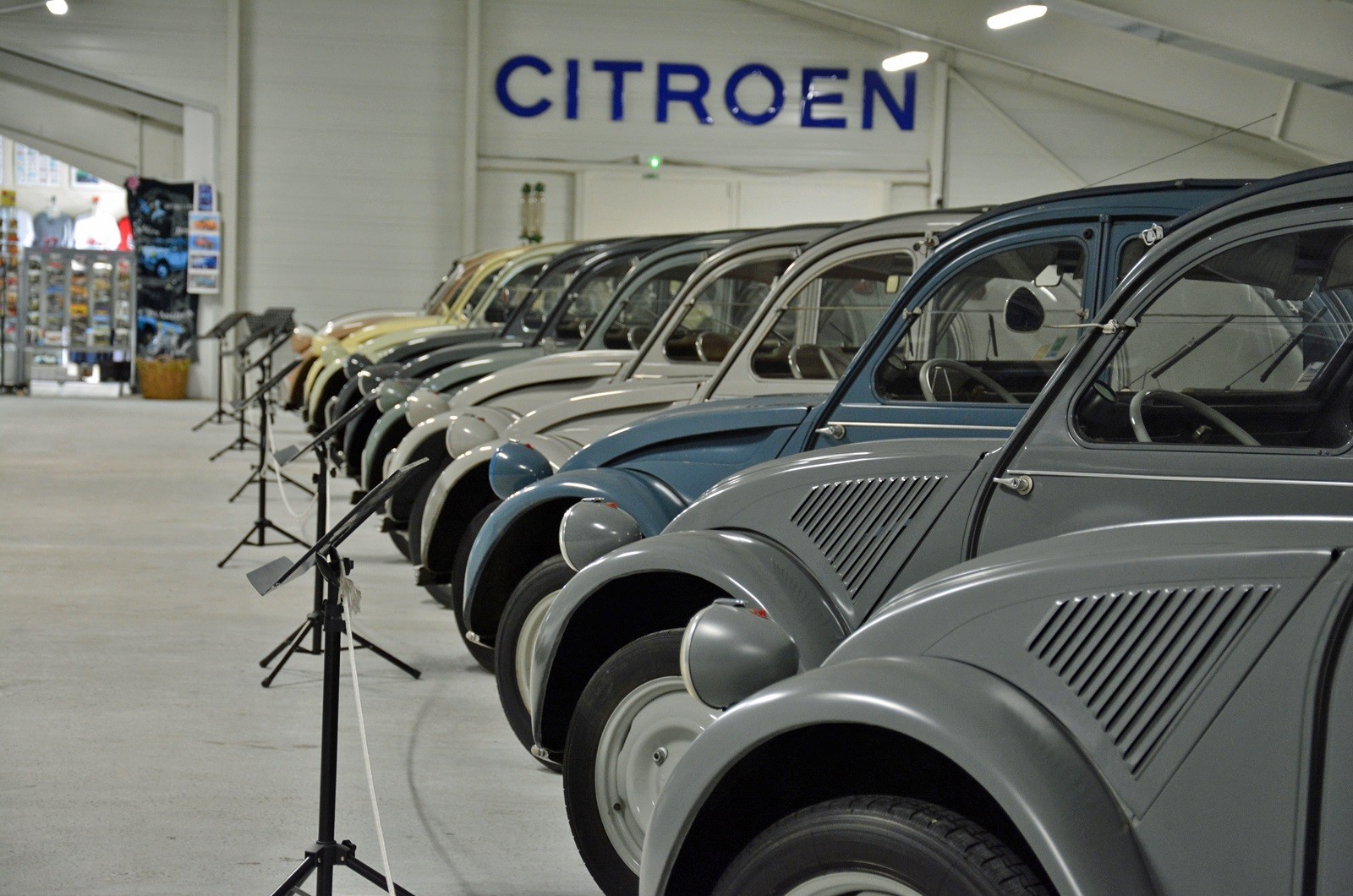
Forget the sterile, company-owned archives in Paris. Henri Fradet is winning the battle for the soul of French automotive heritage.
He isn’t a corporation. He’s just a guy with too much money and way too much patience. Over the last 40 years, this French enthusiast has hunted down 122 post-war Citroëns. He didn’t buy them in bulk. He didn’t inherit them. He tracked them down across the country, focusing on low-mileage survivors that never saw a body shop.
Now, they live in Castellane.
It’s a tiny town in the southern Alps, far from the glitz of the Riviera. The collection has a name: CitroMuseum. It is less a warehouse and more a shrine. If you are wondering where to see the world’s largest private Citroën collection, this is it. But the story is in the details. The specific cars. The ones that should have died decades ago but didn’t.
The Three Chambers of Time
You walk into CitroMuseum and the air changes. It smells like old paper and oil. The space is split into three distinct zones, each acting as a time capsule.
The first chamber is heavy with history. It’s all about the Traction Avant. And the DS. The ID models get their own room alongside the 2CVs and their many, many spin-offs. Then there’s the new wing. It’s smaller but packed. This section holds the cars from the 70s through the 90s. The era when Citroën stopped making sense and started making art.
Fradet didn’t just park metal boxes in a room. He curated. Every corner has clutter. Original R&D documents. Rare dealer signage. Miniature models of cars that never made it to production. It feels lived-in. Intentional.
“Fradet prefers unrestored, low-mileage cars. He doesn’t want perfection. He wants history.”
The Traction That Wouldn’t Die
Let’s start with the 1952 Traction 15/6. Technically, the Traction Avant launched in 1934. So it’s a pre-war car. But Citroën kept building them until 1957. That longevity is the only reason this specific example gets to hang out with the post-war gang.
It’s got a straight-six engine. 2.9 liters. 77 horsepower. By modern standards? Pathetic. By 1950s standards? Civilized. This specific chassis has done about 40,000 kilometers (25,000 miles). That’s it. Since 1952.
A previous owner bought it in 1973. He kept it indoors. He didn’t drive it hard. When that owner died, the car sat. It waited. Until 2016, when Fradet rescued it from obscurity and parked it here, next to cars far more valuable.
Chassis Number 32: The First of Its Kind
This is the headline grabber. The black 1955 DS.
If you ask any collector which early DS model is most significant, the answer is usually “number 32.”
Citroën started mass production in February 1956. Before that, they hand-built the prototypes. And early production models. This car is one of those hand-built anomalies. It’s the 14th DS sold in the world. The oldest surviving series-production example.
Think about that. The first 13 were likely junked or crashed. They were prototypes. They were testing mules. Number 32 survived.
It left the factory destined for a dealership in Valence. It was a demo car. But the dealer didn’t return it. He sold it to a loyal customer. That customer kept it. Then another owner. Then another. By the time Fradet bought it, it had 69,000 kilometers on the clock.
It spent 13 years in a Dutch museum before moving to France. Does the mileage matter? To some, yes. To Fradet, the fact that it exists is the only metric that counts. It’s a ghost that refused to fade.
The ID 19: A Practical Glitch
The DS 19 had a sibling. The ID 19. It was the same car, basically. Same chassis. Same engine. But without the hydraulic hydropneumatic suspension. Without the self-levelling magic. It was cheaper. Duller.
But this 1963 ID 19 is finished in Bleu de Provence. A strange, specific shade of blue that almost no other car has.
Fradet bought this from the second owner. There’s a story attached to the purchase. A mechanical hiccup. He was in Belgium when he bought it. He decided to test the brakes. Or maybe the steering. Something went wrong with the high-pressure pump. A valve stuck.
He fixed it. On the side of a Belgian highway.
Then he drove it to Norway. Where he was living at the time. That’s 27,000 kilometers. Since new. It’s been driven. Really driven. Unlike the pristine specimens in the other rooms, this ID has scars. It has life.
Why This Matters
You might wonder why someone would collect 120 cars. The answer isn’t financial. It’s preservation.
These cars are disappearing. The DS is iconic, yes. But the ID 19? The Ami? The Dyane? They are forgotten. Fradet remembers them.
The CitroMuseum isn’t just a display case. It’s a rejection of the idea that cars must be restored to perfection to be valuable. It’s an argument for authenticity. For originality. For the car as it was when the