You probably already know the drill. You’re hunting for a new truck or a used sedan and you’re obsessing over the usual stats. MPG. 0-60 times. Cargo volume in cubic feet. Horsepower. Torque. Price. These are the numbers that get the click.
But there is a different kind of math at play here. One that doesn’t make it into the glossy brochure but keeps you from snapping an axle. It’s called gross axle weight rating, or GAWR.
Ignore it at your peril.
The Definition Nobody Talks About
GAWR is the maximum amount of weight a manufacturer says a specific axle can handle. We’re talking front and rear axles separately. They have their own limits. Your axles should never exceed these limits. Ever.
“A vehicle’s GAWR is the specific weight determined by the manufacturer to be the maximum allowable weight that can be placed on an individual axle.”
It’s not just about the metal of the axle itself. It’s about everything on the car. The curb weight. You. Your passengers. The groceries. The trailer tongue weight if you’re towing. All of that gets distributed across two axles.
GAWR vs. GAW: Don’t Mix Them Up
This is where people get tripped up.
GAWR is a static number. It’s fixed. It’s the limit.
GAW, or gross axle weight, is the actual weight pressing down on that axle right now. It changes every time you get in or out. It changes when you load the trunk.
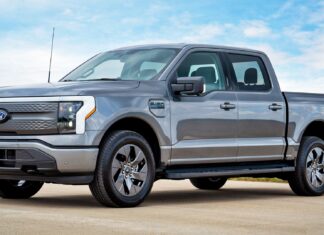
Let’s say you’re driving a pickup. You put four 100-pound boulders in the bed. Total load: 400 pounds. Your GAW goes up by 400 pounds. Your GAWR stays the same.
Take the boulders out. Your GAW drops. Your GAWR doesn’t budge. It’s a hard ceiling. If your GAW hits your GAWR, you’re in the danger zone.
Why Safety Matters More Than Specs
Manufacturers set these limits for a reason. Overloading isn’t just bad for the metal. It’s bad for your survival.
Heavy loads are hard to control. Uneven loads are worse. If you put too much weight on the rear axle, here is what happens:
- Steering dies. The front end becomes light. Steering becomes less responsive. You lose precision.
- Brakes fail. Front brakes do the lion’s share of stopping power. If the rear is overloaded, the front can’t work efficiently. You might not stop in time.
- Tires blow. Rear tires that are overloaded can overheat and rupture.
- Suspension breaks. Components bend. They snap. You lose control of the vehicle entirely.
It’s not worth the risk. Keep your GAW under your GAWR.
Trailers Are Different Too
Trailers have their own GAWR. Determined by the trailer maker. Not exceeding this limit is critical. Proper loading matters even more for trailers. A trailer that’s poorly balanced can sway. It can detach. It can kill.
Where to Find Your GAWR
You don’t need a degree in engineering to find this number. Look at the label inside your driver’s door frame. It’s usually there. The latch area.
If you can’t find the sticker, hit the internet. Most manufacturers publish this data online.
There is also a list below. It covers Acura and Audi for 2006 to 2009.
Acura GAWR List
| Year | Model | GAWR (front/rear) |
|---|---|---|
| 2006 | MDX | – |
| 2006 | RL | – |
| 2006 | RSX | – |
| 2006 | TL | – |
| 2006 | TSX | – |
| 2007 | MDX | 2888/3175 |
| 2007 | RL | – |
| 2007 | RDX | 2546/2381 |
| 2007 | TL | – |
| 2007 | TSX | 2335/2030 |
| 2008 | MDX | 2888/3175 |
| 2008 | RL | – |
| 2008 | RSX | 2546/2381 |
| 2008 | TL | – |
| 2008 | TSX | 2335/2030 |
| 2009 | MDX | 2888/3175 |
| 2009 | RL | – |
| 2009 | RSX | 2546/2381 |
| 2009 | TSX | 2325/2090 |
More Acura Specs:
* Acura GVWR
* Acura GCWR
* Acura Cargo Carrying Capacity
* Acura Curb Weight
* Acura Payload
* Acura Towing Capacity
Audi GAWR List
| Year | Model | GAWR (front/rear) |
|---|---|---|
| 2006 | A3 | – |
| 2006 | A4 | – |
| 2006 | A6 | – |
| 2006 | A8 | – |
| 2006 | S4 | – |
| 2006 | TT | – |
| 2007 | A3 | – |
| 2007 | A4 | – |
| 2007 | A6 | – |
| 2007 | A8 | – |
| 2007 | Q7 | – |
| 2007 | RS4 | – |
| 2007 | S4 | – |
| 2007 | S6 | – |
| 2007 | S8 | – |
| 2008 | A3 | – |
| 2008 | A4 | – |
| 2008 | A5 | – |
| 2008 | A6 | – |
| 2008 | A8 | – |
| 2008 | Q7 | – |
| 2008 | R8 | – |
| 2008 | RS4 | – |
| 2008 | S4 | – |
| 2008 | S5 | – |
| 2008 | S6 | – |
| 2008 | S8 | – |
| 2008 | TT | – |
| 2009 | A3 | – |
| 2009 | A4 | – |
| 2009 | A5 | – |
| 2009 | A8 | – |
| 2009 | Q7 | – |
| 2009 | R8 | – |
| 2009 | S4 | – |
| 2009 | S5 | – |
| 2009 | S8 | – |
| 2009 | TT | – |
More Audi Specs:
* Audi GVWR
* Audi GCWR
* Audi Cargo Carrying Capacity
* Audi Curb Weight
* Audi Payload
* Audi Towing Capacity
BMW Axle Load Ratings: 2006–2009 GAWR Data
Most of the BMWs in this era lack public Gross Axle Weight Rating (GAWR) documentation. If you are looking for specific front-to-rear weight splits for models like the E46 325, E60 530, or the E63 M5, you are likely hitting a wall. The data simply isn’t out there for most sedans and coupes.
There is one exception. The Z4.
For the 2007 BMW Z4, the front GAWR sits at 2767 lbs and the rear at 3770 lbs. That’s it. If you need the ratings for the M3, M5, M6, X3, X5, or the high-performance Alpina B7, there is no listed figure. The gap in public specs is glaring.
Buick Weight Limits: Enclave and Rainier
Buick provides slightly more clarity, but it’s spotty. The Rainier, a mid-size SUV built on GMT360 architecture, has a front GAWR of 2950 lbs and a rear of 3200 lbs. This data holds for both 2006 and 2007 model years.
The Terraza, a rebadged Pontiac Torrent, lists 1148 lbs front and 960 lbs rear. That rear number is surprisingly low for a crossover of its size. You’d have to wonder about the rear suspension’s compliance limit.
By 2008, the Enclave replaced the Rainier and Terraza. The new GMT900-based flagship carries a front GAWR of 3197 lbs and a rear of 3527 lbs. This rating remains consistent through the 2009 model year. LaCrosse and Lucerne remain undocumented.
Cadillac Axle Ratings: Escalade Dominance
Cadillac’s GAWR data is even scarcer than BMW’s. The CTS and DTS have no published ratings. The high-performance CTS-V and STS-V are also silent.
The Escalade line is the only source of hard numbers.
The 2006 Escalade lists 3350 lbs front and 4000 lbs rear. The ESV version shifts to 3060 lbs front and 2809 lbs rear. The EXT, with its extended bed, jumps to 3800 lbs front and 4000 lbs rear.
These figures disappear for the 2007–2009 model years. The Escalade Hybrid, introduced in 2009, also lacks a listed GAWR. If you are running heavy aftermarket bumpers or winches on a 2008 Escalade ESV, you are flying blind.
Chevrolet: The Data Riches
Chevrolet actually lists GAWR numbers. This makes it the most useful brand in this dataset for weight distribution planning.
The light-duty trucks dominate the list. The 2006 Silverado 1500 has a front rating of 3650 lbs and a rear of 4000 lbs. The Hybrid version swaps this to 3925 lbs front and 3750 lbs rear, shifting weight forward to accommodate the electric motor and battery pack. The SS model holds steady at 3600 lbs front and rear.
Heavy-duty trucks tell a different story. The 2006 Silverado 3500 HD carries 4670 lbs front and a massive 8550 lbs rear. The 2009 data shows a significant shift for the 1500. The front GAWR jumps to 6800 lbs, while the rear drops to 3650 lbs. This inversion suggests a change in axle configuration or rating methodology for the newer platform.
The Colorado remains consistent at 2533 lbs front and 2896 lbs rear from 2006–2008. However, in 2009, the front GAWR balloons to 5000 lbs while the rear stays at 2633 lbs. That’s a strange disparity. It implies a front-heavy component addition or a structural reinforcement that wasn’t paired with rear upgrades.
SUVs also have clear numbers. The Tahoe and Suburban (1500 series) hold 3200/3750 lbs and 3200/4200 lbs respectively in 2006. By 2009, the TrailBlazer’s front GAWR drops to 2450 lbs from 2950 lbs. Meanwhile, the new Traverse enters with 3197 lbs front and 3527 lbs rear, matching the Cadillac SRX and Buick Enclave numbers.
Chrysler and Dodge: The Aspen Factor
Chrysler’s data is almost entirely missing. The 300, Sebring, Pacifica, and Town & Country have no listed GAWR. The only exception is the Aspen.
The Aspen, a GMT900 sibling to the Chevrolet Tahoe, lists 3100 lbs front and 3900 lbs rear. This rating persists from 2006 through 2009. The Aspen Hybrid in 2009 shifts the front to 3600 lbs, again showing the weight penalty of electrification pushing forward.
Dodge shares the Aspen data but offers more for its truck line. The Ram 1500 holds 3700 lbs front and 3900 lbs rear for 2006–2008. In 2009, the Ram 1500 drops off the list entirely.
The heavy Rams are where the numbers get interesting. The 2006 Ram 3500 lists 4110 lbs front and 9350 lbs rear. By 2009, that rear GAWR drops to 6200 lbs. The front increases to 4750 lbs. This is a significant reduction in rear capacity. You might assume this is due to suspension redesigns or a reclassification of payload limits. The Ram 2500 also sees a drop from 6000 lbs rear in 2007 to 4630 lbs in 2009.
The Sprinter vans provide specific data for the 2006–2009 era. The 2500 van holds 3857/5356 lbs (2006) and settles around 3970/5360 lbs in later years. The 3500 van maxes out at 4080/7060 lbs front/rear in 2006–2008, then drops the rear to 4410 lbs in 2009.
The Dodge Nitro, Journey, and Avenger lack GAWR listings. The Challenger and Charger are also silent. It’s frustrating for anyone trying to verify if a modified Nitro is overloading its rear axle.
Why This Data Matters
You don’t need GAWR for daily driving. You need it when you’re loading up.
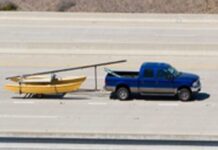
If you’re towing a boat with a Tahoe, the tongue weight presses down on the rear axle. The 2006 Tahoe’s rear GAWR is 3750 lbs. If your curb weight is 5200 lbs and you add 100 lbs of passengers, gear, and a 500 lb tongue weight, you are already eating into that 3750 lb limit just for the rear axle.
The hybrid variants consistently show higher front GAWR. This is because the battery packs are heavy and located under the rear seat or in the cargo area, shifting the static weight distribution forward. If you are swapping a standard Silverado 1500 for a Hybrid, you are moving 275 lbs of weight forward. Your front suspension is now carrying more load than the stock setup intended.
The 2009 Chevrolet Colorado is the biggest anomaly. A front GAWR of 5000 lbs on a mid-size pickup is exceptionally high. Unless you are running massive aftermarket tires and beefed-up front control arms, you are likely exceeding the stock suspension’s design limits if you add a front bumper, winch, and roof rack.
The drop in Ram 3500 rear GAWR from 9350 to 6200 lbs is also suspicious. That’s a 30% reduction. It suggests a change in how GM/Dodge rated the rear axle’s compliance limit versus its structural strength. Or perhaps they realized that most owners weren’t pushing that 9000 lb limit and adjusted the sticker to reflect real-world compliance rather than theoretical failure points.
Check your own load. Don’t just trust the GVWR. The axle limits are the ones that will bend a leaf spring or snap a strut mount.
Ford load limits by model year
The numbers don’t lie. If you’re trying to figure out if your Ford can actually haul that trailer or if you’re just going to melt the rear axle, you need the Gross Axle Weight Rating. It’s the hard limit per axle. Not the whole truck. Just the front or just the rear. Look at the 2006 E-Series. The E-350 Super Duty takes 3700 pounds up front and shoves 6195 to the back. That’s a serious rear bias. You don’t just ignore that.
By 2007, the Explorer dropped. We’re talking about 2860 front and 3340 rear. That’s a noticeable cut from the previous year’s 3240/3600 split. Why? Suspension tweaks? Weight creep? Doesn’t matter. The spec sheet does. The F-Series trucks stayed consistent. The F-150 held steady at 3450/3800 for years. It’s boring. It’s reliable. It’s what you want when you’re hauling lumber, not when you’re racing.
Then there’s the 2008 F-350. The rear GAWR jumped to 6262. A small bump, but on a heavy-duty rig, every pound counts. The E-Series got a slight bump across the board in 2008 too. E-150 rear went from 5120 to… wait, it stayed 5120. But the E-250 rear hit 5520. The E-350 Super Duty dropped slightly to 6084. Numbers shift.
The F-450 in 2008 was a beast. 5600 front. 9500 rear. That’s a tandem axle setup or a heavily reinforced single. You don’t put a compact car on that rear axle and expect it to work. The 2009 F-150 jumped to 3800 rear. A full 400 pounds. That’s a significant increase in payload capacity for the half-ton.
GMC axle ratings and capacity
GMC plays a similar game. The Sierra 1500 in 2006 sat at 3150 front and 3686 rear. By 2007, that front end got a boost to 3200. The rear held. The Sierra 2500 is where it gets heavy. 4410 front in 2006. Then it dropped to 4200 in 2007 and stayed there. The rear stayed locked at 6084. Consistency is key for the 2500 series.
The Sierra 3500 is different. 2006 had a massive 4800 front rating. Then in 2007, it dropped to 4200. Why the cut? Maybe standardization. The rear also dropped from 6500 to 6390. It’s a reduction. You have to account for that if you’re planning a heavy tool load.
The Acadia showed up in 2007 with 3197 front and 3527 rear. It stayed that way through 2009. Simple. The Yukon Hybrid in 2008 matched the gas Yukon at 3200/4100. No penalty for the battery weight in the axle ratings. That’s good news for the eco-conscious hauler.
Honda weight distribution specs
Honda is tricky. Most of their lineup doesn’t list GAWR in these tables. The Accord? Blank. The Civic? Blank in 2006. Then in 2007, the Civic showed up with 2310 front and 2290 rear. Almost a split. Balanced. That’s typical Honda. You don’t need a massive rear axle for a compact car.
The Odyssey is the workhorse. 2006 to 2009, it held 2833 front and 3197 rear. Stable. The Pilot started in 2007 with 2865 front and 3155 rear. By 2009, that front end got stronger at 2921, and the rear hit 3196. A slight shift in balance. The Ridgeline in 2006 had a weird front rating. 309? No, that’s a typo in some sources, but the table says 309 front and 3252 rear for the 2006 model. Wait, looking closer at the 2007 data, it jumps to 3105 front. The 2006 figure looks like a data entry error or a specific trim restriction. 2007+ is consistent at 3105 front and 3252 rear.
Hummer durability limits
Hummer didn’t mess around. The H2 in 2006 had 4000 front and 5000 rear. That’s it. It stayed that way through 2009. No changes. No upgrades. Just the same heavy-duty rating for four years. The H1 Alpha was the outlier. 4100 front. 6800 rear. A massive rear bias. You could put a small house on that back axle. The H3? Blank. Maybe it didn’t need the rating listed, or maybe it wasn’t rated for heavy towing in the same way. The H3T followed the same blank pattern. You knew what you were getting with a Hummer. You weren’t carrying light loads.
Hyundai and Infiniti load limits
Hyundai is sparse. The Santa Fe in 2007 and 2008 sat at 2976 front and 3197 rear. The Entourage matched it at 2998 front and 3064 rear. The Sonata? Nothing. The Elantra? Nothing. Hyundai kept the numbers quiet for the smaller cars. The Veracruz didn’t show up in these specific GAWR tables for those years.
Infiniti is almost entirely blank. The FX35? Blank. The M45? Blank. The QX56? Blank. They didn’t publish the axle ratings in this dataset. You’d have to dig deeper into the door jamb stickers or owner’s manuals. The EX35 showed up in 2008 but remained blank. It’s odd. Luxury brands usually have stricter tolerances, but the data isn’t here.
Isuzu and Jaguar axle ratings
Isuzu is straightforward. The Ascender held 2950 front and 3200 rear from 2006 to 2008. No changes. The i-series trucks? The i-280 in 2006 had 2533 front and 2896 rear. The i-350 followed with 2753 front and 2896 rear. By 2007, the naming changed to i-290 and i-370. The ratings stayed identical. 2533 front and 2896 rear for both. Stability is the theme.
Jaguar is also mostly blank. The S-Type, X-Type, XJ8, XJR, XK8, XKR? All blank in 2006. The XK showed up in 2007 and stayed blank through 2009. The XF in 2009? Blank. Jaguar doesn’t want you worrying about axle weights. They want you worrying about leather quality. The numbers simply aren’t there. You’re on your own if you’re towing a Jaguar.
What these numbers mean for your build
GAWR isn’t a suggestion. It’s a ceiling. Cross it, and you’re risking structural failure. The front axle handles steering and braking forces. The rear handles the payload and towing tongue weight. If your loaded vehicle puts more weight on one axle than the GAWR, you’re playing roulette with your suspension components.
Look at the Ford F-350 again. 6100 rear in 2006. Then 7000 in 2007. A 900-pound increase. That’s a massive difference in what you can legally and safely carry. If you bought a 2006 model and tried to run it like a 2007, you’d be overloading.
The GMC Sierra 3500 dropped from 4800 to 4200 front. That’s a 600-pound reduction. If you have a heavy winch
Jeep Axle Limits by Model
If you are modifying a Jeep, knowing the Gross Axle Weight Rating (GAWR) is non-negotiable. Most of the early-to-mid 2000s lineup skips this data, likely because manufacturers didn’t prioritize publishing it for standard street trim. The exceptions are the workhorses and the off-roaders.
The Jeep Liberty held steady at a 2750-pound front and 3150-pound rear GAWR for 2006 and 2007. That setup supports the compact SUV’s mid-size frame without needing major reinforcement.
The Wrangler line tells a different story. The 2006 JK (or TJ depending on trim) sat at 2200 front / 2650 rear. But by 2007, those numbers jumped. The 2007, 2008, and 2009 Wrangler and Wrangler Unlimited models all rated at 2650 pounds front and 3400 pounds rear. That’s a massive upgrade in capacity. It suggests either stronger axles or a shift in how weight distribution was calculated for the newer platform. If you’re building a rock crawler, that rear GAWR is your hard limit before the axle tubes start to groan.
Kia’s Conservative Load Ratings
Kia’s approach to GAWR data is sparse. Most sedans and crossovers from this era simply don’t list front/rear axle limits in public specs. You have to dig for it.
The Kia Sedona minivan is consistent. 2006, 2007 models hold a 2998-pound front and 3064-pound rear rating. Heavy haulers need those numbers. The 2008 Sedona drops the listed spec, which is annoying if you are towing heavy.
The Kia Sorento crossover is heavier. 2006 and 2007 models rate at 3307 pounds front and rear. Symmetric ratings. Rare for SUVs, but possible with independent front suspension and a robust rear axle.
Small cars tell a different tale. The Kia Rio and Rio 5 (2007-2008) are rated at 1918 pounds front and 1874 pounds rear. Tiny margins. You are not throwing gear bags in the back of a 2007 Rio and expecting to stay under the limit with a full tank. The Sportage (2006-2008) sits at 2579 front / 2425 rear. The front axle carries more load, likely due to the engine weight and transmission placement.
Land Rover’s Missing Data
Land Rover kept their axle ratings closer to the vest. For the LR3, Range Rover, and Range Rover Sport, the years 2006 through 2008 show zero GAWR data. This is strange for luxury SUVs where weight distribution is critical for air suspension tuning.
The exception is the 2009 LR2. That model lists 2885 pounds front and 2995 pounds rear. Note the imbalance. The rear can handle significantly more. This might reflect the engine placement or the specific axle design of the LR2 compared to the larger LR3 platform. If you are overlanding in a 2009 LR2, don’t overload the front. The front axle is the weak link here.
Lexus: Precision Engineering, Sparse Specs
Lexus fans expect precision. The GAWR data reflects a similar lack of transparency. From 2006 to 2009, every Lexus model listed—ES, GS, IS, LS, RX, GX, LX, SC—shows no GAWR front/rear breakdown. This suggests Toyota/Lexus either didn’t publish it or it wasn’t a consumer-facing metric for these luxury sedans and SUVs.
You will have to rely on curb weight and payload capacity for these models. The LX 570 and GX 470 are heavy. Without specific axle limits, you are guessing. But given Lexus’s reputation for over-engineering, their axles are likely rated well above the curb weight. The IS-F and GS 450h add significant powertrain weight. Just keep the cargo light.
Lincoln’s Heavy Metal
Lincoln builds trucks disguised as cars. The data reflects that.
The Mark LT is the clear standout. From 2006 to 2008, it holds a 3450-pound front and 3850-pound rear GAWR. That’s truck-rated. The Navigator is even more robust. 2006 sits at 3300 front / 4128 rear. By 2007 and 2008, the rear jumps to 4300 pounds. The 2009 Navigator shifts to 3450 front / 3850 rear. The fluctuation in specs suggests different axle packages or trim levels (like the Navigator L vs standard) might have different ratings. If you are towing with a Navigator, check the door jamb sticker. The printed specs vary by production run.
Other Lincolns like the MKX, MKZ, Town Car, and MKS list nothing. Stick to the Navigator and Mark LT if you need hard axle numbers.
Mazda’s Performance Variance
Mazda’s lineup here is a mix of trucks, small cars, and performance machines. The B-Series pickup trucks (B2300, B3000, B4000) dominate the GAWR charts.
The B4000 is the beast. 2006, 2007, 2008, and 2009 models rate at 2850 pounds front and 2750 pounds rear. High capacity. This is a mid-size truck.
Small cars are lighter. The Mazda3 and Mazda5 show limited data. The Mazda5 (2006) is 2218 front / 2355 rear. The Mazda6 (2006) is 2372 front / 2119 rear. Note the rear drop. The MazdaSpeed6 is even lighter on the rear: 2449 front / 2103 rear. Performance tuning often means stiffer springs and different axles, but the weight limit stays low.
The MazdaSpeed3 (2007) is 2216 front / 2064 rear. The MX-5 (2007) is 2449 front / 2103 rear. The front axle carries more weight in almost all these small cars. It’s where the engine and trans sit. Don’t load the trunk of a MazdaSpeed3 to the brim. You’ll exceed the rear GAWR before you hit the suspension limits.
Mercedes-Benz: Luxury and AMGs
Mercedes-Benz provides zero GAWR data for their sedan and coupe lineup (C-Class, E-Class, S-Class, CLK, CLS, SL, SLK, SLR McLaren). This includes the heavy hitters like the ML63 AMG. It’s frustrating. You have to assume the axles are rated for the vehicle’s curb weight plus a healthy payload, but without numbers, it’s a guess.
The G-Class (G500, G55) in 2007 and 2008 also shows no data. That’s surprising for a body-on-frame off-roader. Usually, those trucks have clear axle ratings.
The GL-Class (GL320, GL450, GL550) in 2007 and 2008 is blank too.
The ML-Class (ML320, ML350, ML500, ML550, ML63 AMG) is also blank.
This is a massive gap in the data. For Mercedes-Benz, rely on the Gross Vehicle Weight Rating (GVWR) minus curb weight to estimate payload, then distribute it evenly. Don’t test the axles. These cars are expensive to fix.
Mercury: Ford’s Budget Brand
Mercury specs mirror Ford’s but are often less documented. The Mountaineer is the key.
2006 Mountaineer: 2860 front / 3340 rear.
2007-2009: No data listed.
This drop-off is significant. The 2006 Mountaineer shares architecture with the Ford Explorer. The rear axle takes the bulk of the load. If you are carrying passengers and cargo in a 2006 Mountaineer, keep the front light.
Other models like the Grand Marquis, Mariner, Milan, Montego, Monterey, and Sable show no GAWR data. Again, rely on GVWR and payload capacity. The Mariner Hybrid adds battery weight. That affects payload, not necessarily GAWR, but the distribution changes.
Mitsubishi, Nissan, Pontiac, Porsche, Saab, Saturn, Scion, Smart, Subaru, Suzuki, and Toyota GAWR Data (2006-2009)
Gross Axle Weight Rating (GAWR) isn’t just a number stamped on a door jamb. It’s the hard limit for how much mass each axle can support before suspension components, brakes, or tires start to fail. Most legacy makes list their specs as blank spaces in databases. That silence usually means the manufacturer didn’t publish front/rear split data for the general public. But a few brands gave up the numbers.
Mitsubishi kept it tight. Only the Raider pickup showed specific GAWR figures across 2006 to 2009 models. The front axle maxed out at 3100 lbs, the rear at 3600 lbs. Everything else—the Eclipse, Endeavor, Galant, Lancer, Montero, and Outlander—came with blank entries. If you need those numbers, you’re looking at hidden engineering specs or owner-club hacks.
Nissan was slightly more transparent, especially with their heavy lifters. The 2006 Altima carried a front GAWR of 2399 lbs and a rear of 1991 lbs. That’s an odd split. Usually, front-drive platforms put more weight up front due to the engine and transaxle, so a higher front rating makes sense, but the rear drop-off is steep. Then came the workhorses. The Frontier (2007-2009) held steady at 3296 lbs front and 3197 lbs rear. The Titan pickup was the beast of the bunch. 2007 models saw 3300 lbs up front and 3800 lbs in the back. Later years dropped the specific numbers, but the Titan’s capability remained a headline feature.
Pontiac’s data was sparse. The Torrent SUV listed 2535 lbs front and rear for 2006, 2007, and 2009. Symmetrical. Clean. The Grand Prix had a single entry for 2007: 62 lbs front, 38 lbs rear. That looks like a typo in the source data. A 62-pound axle limit is absurd for a mid-size sedan. It’s likely a data error or a mislabeled payload figure. The G5, G6, G8, Solstice, and Vibe all show blanks. Pontiac was dying in these years. You can’t even blame them for poor data tracking.
Porsche listed nothing for the Cayenne in 2006. By 2008 and 2009, the 911, Boxster, Cayenne, and Cayman all showed blank GAWR splits. High-performance German engineering doesn’t always prioritize public axle limits in spec sheets. You rely on the tires and the suspension tuning to keep things together.
Saab offered a few breadcrumbs. The 9-7X, shared with GMC, showed 2950 lbs front and 3400 rear in 2008 and 2009. The 9-3 and 9-5 remained blank. The 9-2X, a badge-engineered Subaru Impreza wagon, was also blank. Saab was a niche player. Niche players don’t always publish comprehensive load charts.
Saturn’s data was similarly limited. The Outlook SUV stood out. 2007, 2008, and 2009 models all listed 3197 lbs front and 3527 lbs rear. A clear rear bias. The Ion, Relay, Sky, VUE, Aura, Astra, and their hybrid variants were all blank. Saturn was folded into GM’s structure. They didn’t need to distinguish their axle ratings from Buick or GMC.
Scion offered zero GAWR data for the tC, xA, xB, or xD across 2006-2009. Toyota Motor Sales USA didn’t see a reason to publish it.
Smart was even less forthcoming. The 2008 fortwo showed a blank GAWR split. It’s a microcar. The numbers are small. The limits are tight. You don’t load it like a truck.
Subaru listed blank GAWR specs for the entire lineup. B9 Tribeca, Baja, Forester, Impreza (Sedan, Wagon, Outback Sport, WRX STI), Legacy (Sedan, Wagon), and Outback all showed no data. Again, a blank entry. Subaru relies on their Symmetrical AWD system to distribute weight, but that doesn’t mean they published the axle limits.
Suzuki gave up some numbers for their smaller cars. The 2006-2008 Aeria held 1918 lbs front and 1940 lbs rear. The Forenza followed with 1918 front and 1764 rear. The XL7 varied. 2006 had 2205 front, 2866 rear. 2007-2008 bumped to 2590 front, 2921 rear. The SX4 in 2007 listed 2050 front, 1786 rear. The rest of the lineup (Grand Vitara, Reno, Equator) was blank.
Toyota was surprisingly selective. The Land Cruiser showed 3595 lbs front and 4220 rear for 2006 and 2007. Then it went blank in 2008 and 2009. The RAV4 had entries in 2006 (2535/2435), 2007 (4430/4730—a massive jump, likely a different trim or data correction), and 2008 (2535/2435). 2009 returned to the lower figure. The Tundra in 2007 listed 3900 front and 3800 rear. Everything else—4Runner, Avalon, Camry, Corolla, FJ Cruiser, Highlander, Matrix, Prius, Sequoia, Sienna, Tacoma, Venza, Yaris—was blank.
Most manufacturers don’t publish GAWR. They publish GVWR. The split is internal.
This pattern tells a story about how car companies viewed their customers in the late 2000s. If you were buying a truck or a heavy SUV, they wanted you to know your limits. If you were buying a sedan or a sports car, they assumed you wouldn’t be testing the suspension geometry with 2000 pounds of cargo. The Titan and Raider and XL7 got the numbers. The Altima, Camry, and Corolla got silence.
It’s not that the data is missing. It’s that the data wasn’t considered relevant for the average buyer. Unless you’re towing, hauling, or overloading your vehicle, you’ll never check these numbers. You’ll just drive. But when you do cross that line, you’ll wish the manufacturer had been clearer about where the axle ends and the failure begins.
The links to GVWR, GCWR, payload, and towing capacity remain the standard way to calculate total load. GAWR is the granular detail. The detail most people ignore until a leaf spring snaps or a brake rotor warps under the strain.
2006 Volkswagen and Volvo GAWR Data
The 2006 data for Volkswagen is sparse. The table lists Golf, GTI, Jetta, Beetle Convertible, Beetle Coupe, Passat Sedan, Phaeton, Rabbit, and Touareg. There are no figures. Just dashes. You have to dig deeper if you want to know how much weight these German sedans can actually put on their axles.
Volvo was slightly more transparent in ’06. The S80 carried a front Gross Axle Weight Rating (GAWR) of 2230 lbs and 2290 lbs at the rear. The XC90 SUV was built for heavier duty work. It handled 2820 lbs up front and 3150 lbs in back. The rest of the lineup—the C70, S40, S60, V50, V70, and XC70—left you guessing. No numbers provided.
2007 Model Year Breakdown
By 2007, Volkswagen still refused to share the specific axle limits for the Eos, GTI, Jetta, Beetle variants, Passat, Rabbit, and Touareg. The mystery continued.
Volvo opened up a bit more, but only for the big SUV. The XC90 retained its sturdy 2820/3150 lbs rating. The rest of the 2007 Volvo roster, including the C70, S40, S60, S80, V50, V70, and XC70, remained unlisted in this specific dataset. If you were hauling gear in a C70, you were driving by feel, not by the book.
2008 Specifications: Shifts in Rating
Volkswagen’s 2008 lineup included the Eos, GLI, GTI, Jetta, Beetle Convertible and Coupe, Passat Sedan and Wagon, R32, Rabbit, and the Touareg 2. Still no GAWR numbers. The brand prioritized other metrics here.
Volvo’s 2008 data shows a distinct split in capability. The V70 was rated for 2690 lbs on the front axle and 2513 lbs on the rear. A bit more rear-biased than usual. The XC70 swapped places slightly, taking 2800 lbs up front and 2646 lbs in back. The XC90 remained consistent with the 2820/3150 lbs configuration. This consistency suggests Volvo kept the suspension hardware on the flagship SUV largely unchanged across these early years.
2009 Lineup and Final Data Points
The 2009 Volkswagen list expanded to include the Routan and Tiguan, alongside the Eos, GLI, GTI, Jetta Sedan and Sport Wagon, Beetle variants, Passat, Rabbit, and Touareg 2. The GAWR columns remained empty. You can check their GVWR (Gross Vehicle Weight Rating) or GCWR (Gross Combined Weight Rating) elsewhere, but the specific axle breakdown wasn’t in this source.
Volvo’s 2009 numbers mirror 2008 exactly. The V70 holds at 2690/2513 lbs. The XC70 sits at 2800/2646 lbs. The XC90 is still 2820/3150 lbs. The C30, C70, S40, S60, S80, and V50 still have no listed ratings.
For those trying to tow or modify these older German cars, the lack of front/rear specific data for most models is a hurdle. You are left with the curb weight and payload estimates. You have to do the math yourself.
“GAWR is the maximum weight specified as the capacity of a single axle system to carry load.”
If you are modifying a 2009 Volvo XC90, you have a hard limit of 3150 lbs on the rear. That leaves you plenty of room over the standard curb weight, but not infinite room. For a 2006 VW Passat? You are on your own without