What exactly is the Lancia Thesis and why was it made?
Lancia poured an absurd amount of cash and time into the Thesis. It wasn’t just a rebadged Fiat. They built it on a bespoke chassis, borrowed suspension tech from Maserati models like the Spyder and GranTurismo, and even slapped in radar-guided cruise control. It was the first Lancia with that feature.
The goal? Beat the BMW 5 Series and Mercedes-Benz E-Class.
They failed.
Only 20,000 were made before Lancia pulled the plug after eight years. It never even launched in the UK. Which makes it weird. Rare. Almost ghost-like in the Italian auto landscape.
Why did Lancia build a car that no one wanted?
You have to look at the DNA. The production Thesis evolved from the 1998 Dialogos concept. That prototype was sharp. Suicide rear doors, a wooden floor, clean lines. It promised something different. Something Italian but modern.
The production car kept the name. It lost the soul.
Lancia’s marketing team probably told people to pronounce it ‘tay-sis’ to distance it from the academic term for a formal argument. A smart move? Maybe. But the execution didn’t follow through.
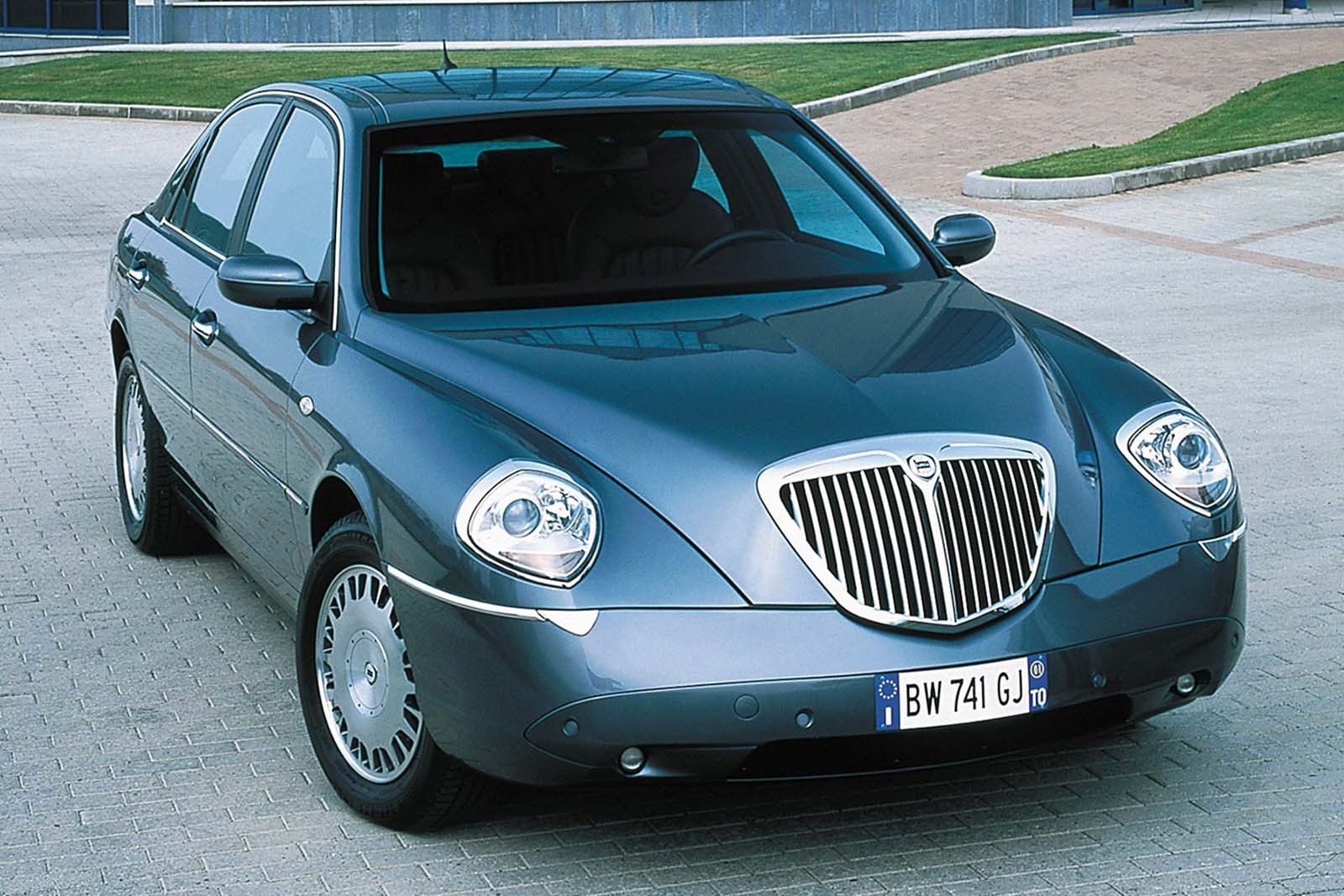
The front grille looks like a medieval shield. The rear lights have a translucent, gothic glow. From those angles, it’s distinctive. Even beautiful, if you’re into that specific kind of melancholic automotive design.
Then you look at the side.
The boring middle of a beautiful car
It’s a car of three distinct parts. A dramatic nose. A dramatic tail. And sandwiched between them? The dullest center section of any executive sedan on the road.
It’s a pity. The concept had nerve. The production model didn’t.
Inside, however, they tried to recover. The cabin is sparse but rich. Cream-faced instruments, spare wood trim, heavily upholstered seats. You could even get heated, cooled, and massaged seats in both the front and rear. It’s the sort of interior that makes you want to stay parked in the garage.
“Despite the loss of the concept’s wooden floor… the Thesis feels pretty special inside.”
It’s comfortable. It’s quiet. It’s soft. But it’s not a driver’s car. And in the battle against the 5 Series and E-Class, that’s a death sentence.
Did the Lancia Thesis drive well on real roads?
Comfort is one thing. Rigidity is another.
There was a specific, annoying problem with Fiat Group products in the early 2000s. Hit a sharp transverse ridge—like an expansion strip on a highway—and the dashboard would judder. A creaky, plastic-shaking tremor. It made the interior feel cheap. Flimsy.
Lancia knew this. They spent extra money on the Thesis. They used higher-quality materials. They hoped it would be immune.
I sat in one at Turin airport. Minutes later, we hit the autostrada.
Crack.
Faint plastic sound. The dashboard quivered. The suspension failed to suppress the vibration from the expansion strip. The aura of mild flimsiness was there. Just like the other Fiats. Just like the cheaper cars.
Is the Lancia Thesis a good car?
It’s a fascinating failure.
If you ignore the driving dynamics, it’s a stylish, comfortable cruiser. The tech was ahead of its time for a Lancia. The design is polarizing but memorable. But the fundamental disconnect between the ambitious concept and the timid reality doomed it.
Lancia wanted to compete with the Germans. They built a car that looked like a German car tried to be Italian but forgot how.
It’s rare now. You won’t see many. Maybe that’s for the best. Or maybe it’s just another lesson in why brands shouldn’t ignore their identity.
Who knows. The Thesis is gone. The expansion strips remain.